
For our September Member Spotlight, we’re featuring the Nebraska Department of Economic Development (DED), the administrator of the state’s Business Innovation Act (BIA) programs.
As the state’s lead economic development agency, the Nebraska Department of Economic Development (DED) strengthens the state’s bio industry through business recruitment and expansion efforts, workforce development initiatives, and international trade promotion. DED also administers a suite of business innovation programs for Nebraska-based startups and small businesses. These programs have sparked the growth of numerous Nebraska bio companies—generating $11.52 in follow-on investment and $15.90 in revenue for every state dollar invested. Additionally, DED recruited World Bio Markets’ inaugural U.S. conferences (Bio Innovations) to the state in 2024, 2025, and 2026 to showcase the state’s bioeconomy.
DED administers the following Business Innovation Act (BIA) programs, which have each contributed significantly to growth of the state’s bio-based businesses.
The Nebraska Innovation Fund Prototype Grant Program assists companies with initial product development. Applicants must show the proposed product has high growth potential and must demonstrate that it innovatively answers a market need.
In 2024, DED awarded Prototype funding to Omedus. The Omaha-based med tech manufacturing startup is automating emergency triage for first responders. The grant supported Omedus in the development its Triage360 monitoring platform. Triage360 is improving casualty triage in military settings and providing continuous patient surveillance in hospitals and rural health systems to improve the quality of emergency care. In May 2026, Omedus won prize money at the Health Security Innovation Challenge for its inventive Triage 360 platform.
The Nebraska Seed Investment Program is an equity investment program that supports early-stage startups in their commercialization of a product, service, or technology. DED contracts with Invest Nebraska, a nonprofit 501(c)3 venture capital firm, to operate the program. Invest Nebraska conducts due diligence on all applicants and places and holds the equity investments made through the program.
In 2026, DED awarded Seed Investment funding to DARO, an ag tech startup located at Nebraska Innovation Campus in Lincoln. Applying advancements in molecular biology, DARO provides pathogen surveillance to detect early warning signs that an animal is unwell in order to guard against swine disease outbreaks. As Daro grows, it is taking its technology across the globe. Earlier this year, DARO’s team traveled to the Democratic Republic of the Congo, where they successfully tested their whole-herd surveillance system alongside local veterinarians.
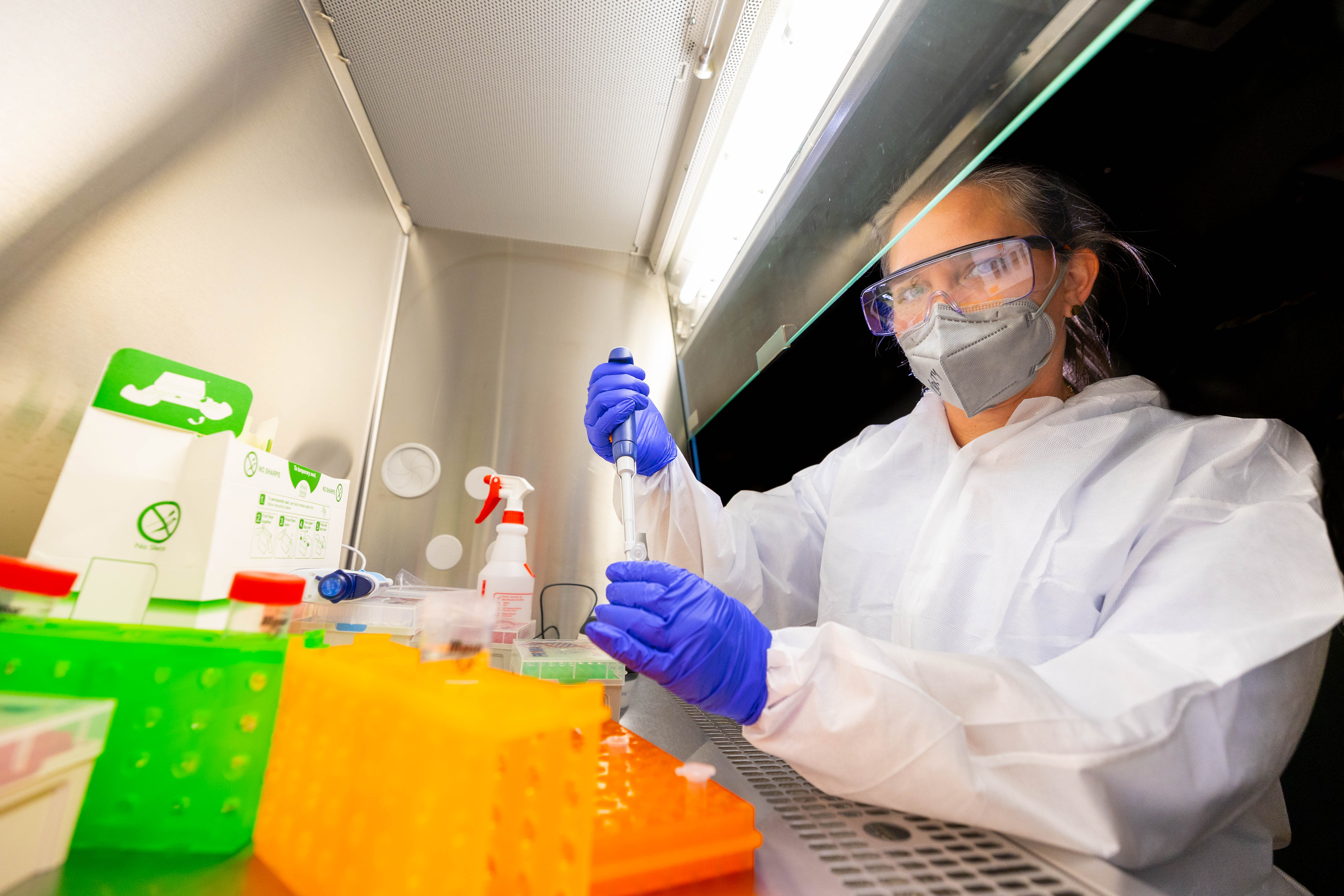
The Nebraska Academic R&D Grant Program supports companies who engage with an institution of higher education in Nebraska on activities that lead to new or improved products. These activities include applied research, the licensure of intellectual property, or use of core facilities. R&D awards are available during two phases. Phase I grants are typically awarded to first-time recipients and often support proof-of-concept activities. Phase II grants are awarded to companies who have successfully completed the first phase, and typically represent technical assistance for product design and development.
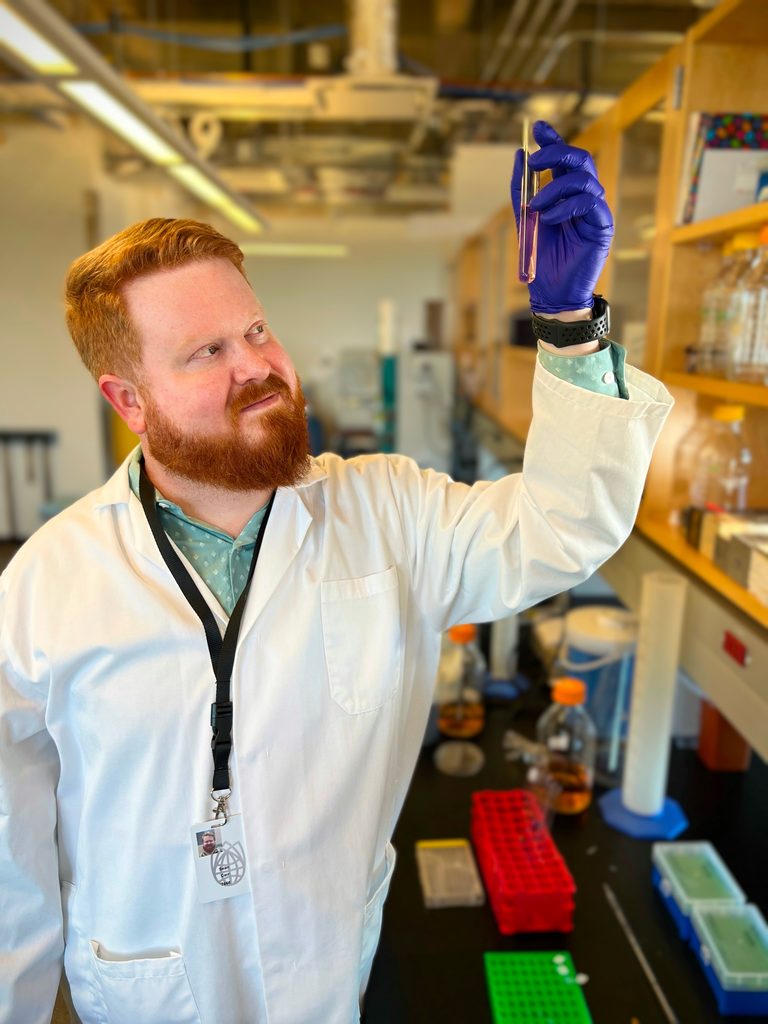
Dr. Sean Carr holds a Ph.D. in Microbiology from UNL. As CEO of Molecular Trait Evolution (MTE), he studies organisms living in the some of the harshest conditions on Earth—such as hydrothermal vents on the ocean floor or acid lakes in places like Yellowstone National Park. Dr. Carr has taken genes from these resilient organisms to engineer a unique mixture of enzymes. At near-boiling temperatures, the enzyme cocktail can convert low-value plant materials into higher-value oils and sugars. These enzymes can help boost ethanol production output. Since they can survive the distilling process, the enzymes can also be recycled—helping ethanol producers to save money on enzyme costs.
An initial BIA Academic R&D grant helped MTE set up an independent lab in the Biotech Connector at Nebraska Innovation Campus. There, the company proved it could produce its enzymes outside of a university lab setting. In late 2024, the company received a second Academic R&D grant, along with seed funding, to scale up production. These funds are also allowing Dr. Carr to hire a senior scientist and research technicians so that he can devote more time to running the business. “BIA program funding allowed me to get over those first hurdles that, without startup funding, are kind of impossible to surmount unless you’re independently wealthy,” Dr. Carr said. “I started this company on a postdoctoral salary. I wouldn’t have been able to take the time and effort to get this company off the ground without these awards.”
The Nebraska Small Business Innovation Research/Small Business Tech Transfer (SBIR/STTR) Grant Program supports companies applying for or making use of funding through the federal Small Business Innovation Research/Small Business Technology Transfer initiative. Awards are available in three phases:
- Phase 0 grants provide financial assistance to small businesses applying for federal SBIR/STTR funds.
- Phase I grants are state matching funds available to Nebraska small businesses who have won federal SBIR/ STTR grants to research the feasibility of a proposed product or service.
- Phase II grants are state matching funds available to Nebraska small businesses who have successfully completed Phase I feasibility research and have received additional federal SBIR/STTR funding to turn their research into commercially viable innovations.
DED awarded Phase II SBIR/STTR funds to Bluestem Biosciences in September 2025. Bluestem is currently creating a facility in Nebraska to demonstrate its processes to manufacture sustainable biochemicals. The company has also received multiple federal awards to support its pioneering work to transform corn into biochemicals using anerobic fermentation.
DED welcomes opportunities to support the growth of Nebraska’s bio-based companies! In particular, businesses interested in BIA grant funding are invited to contact Ben Kuspa, DED’s Business Innovation Manager, at ben.kuspa@nebraska.gov.
EDITOR’S NOTE: The businesses listed in this piece are Bio Nebraska members.